


PMB 75/130 Exporter and Supplier from Brazil
Soft, Elastic Polymer Modified Bitumen for Crack-Resistant Interlayers and Special Treatments
Brazil Bitumen, powered by Tiger Bitumen (HY International Group), is a PMB 75/130 supplier from Brazil for international importers, distributors, asphalt producers and road contractors. PMB 75/130 is a soft polymer modified bitumen grade intended for applications where flexibility and elasticity are important.
This grade combines a soft consistency with toughness and elastic recovery. For example, it may be specified for stress-absorbing membranes, anti-crack interlayers and selected surface treatments. These applications are designed to accommodate movement and stress within pavement layers rather than simply increase stiffness.
In addition, each offer should include a technical data sheet that identifies the applicable grade designation, test methods and specification limits. Buyers and their engineers can then compare the offered product with the project requirements before placing an order.
What is PMB 75/130?
PMB 75/130 is a polymer modified bitumen grade described within the EN 14023 framework. The figures 75/130 indicate a penetration range of 75 to 130 tenths of a millimetre at 25 °C. Therefore, this grade is generally associated with applications where flexibility and elastic behaviour are required.
A designation such as PMB 75/130-60 indicates a particular softening-point class; in this example, 60 refers to the minimum softening point in degrees Celsius. However, the exact class for the product offered must be confirmed in its technical data sheet rather than assumed from the grade name alone.
Polymer modified bitumen can be manufactured using elastomeric polymers such as SBS. The polymer type and modification method used in a particular supply should be stated only when confirmed by the manufacturer’s technical documentation.
PMB 75/130 Technical Specifications
The following table summarises the main properties used to assess PMB 75/130. The applicable requirements depend on the selected grade class and project specification. Therefore, buyers should confirm the offered product’s values against its technical data sheet and the certificate of analysis for the supplied batch.
| Polymer Modified Bitumen 75/130 | |||
| Property | Test method | General PMB 75/130 requirement (EN 14023) | Brazil Bitumen offer |
| Penetration at 25 °C(0.1 mm) | EN 1426 | 75 to 130 | Within 75 to 130; batch result on certificate of analysis |
| Softening point, ring and ball (°C) | EN 1427 | Minimum set by the designation class, e.g. ≥ 60 for PMB 75/130-60 | Class stated in technical data sheet |
| Elastic recovery at 25°C (%) | EN 13398 | Class selected by the project specification | Stated in technical data sheet |
| Fraass breaking point (°C) | EN 12593 | Class selected by the project specification | Stated in technical data sheet |
| Cohesion: force ductility (J/cm²) | EN 13589 / EN 13703 | Class selected by the project specification | Stated in technical data sheet |
| Flash point (°C) | EN ISO 2592 | Class selected by the project specification | Stated in technical data sheet |
| Storage stability: difference in softening point (°C) | EN 13399 / EN 1427 | Class selected by the project specification | Stated in technical data sheet |
| Resistance to hardening (RTFOT): change of mass, retained penetration, change in softening point | EN 12607-1 | Classes selected by the project specification | Stated in technical data sheet |
Brazilian specifications. In Brazil, elastomer-modified asphalts are typed as 55/75-E, 60/85-E and 65/90-E under ANP Resolution No. 897/2022. These types are defined by minimum softening point and elastic recovery, and each also carries its own penetration limits. PMB 75/130 is therefore not automatically equivalent to any of them. Buyers supplying Brazilian projects should compare our technical data sheet with the applicable ANP, DNIT or project specification.
Applications of PMB 75/130
PMB 75/130 may be selected for pavement layers and treatments designed to absorb movement and help manage cracking. Depending on the project specification, typical applications include:
- Stress-absorbing membranes and stress-absorbing membrane interlayers (SAM/SAMI).
- Anti-crack bituminous mortars and interlayers designed to help delay reflective cracking.
- Interlayer systems used with non-woven polypropylene geotextiles, where specified.
- Special asphalt mixes and selected road surface treatments.
- Base binder for producing polymer modified bitumen emulsions, where the formulation is suitable.
- Maintenance and rehabilitation of cracked pavements, subject to the project design.
However, the suitability of PMB 75/130 for any specific treatment must be confirmed against the product data sheet, local requirements and pavement design.
Key Features and Benefits
When correctly specified and used in a suitable design, PMB 75/130 may offer the following benefits:
- Toughness and elasticity: may help the binder accommodate stress and movement within pavement layers.
- Support for crack management: when used in suitable interlayers, it may help delay reflective cracking.
- Cohesion: appropriate cohesion can support bonding and aggregate retention in membranes and surface treatments.
- Low-temperature flexibility: the binder’s properties may help it accommodate movement in cooler conditions.
- Potential for modified emulsions: suitable formulations may be used as a base binder in emulsion production.
Nevertheless, actual performance depends on the formulation, aggregate, construction methods, climate, traffic and pavement design. Always check the technical documentation before specifying the product.
Handling, Packaging and Documentation
PMB 75/130 requires controlled heating and storage according to the supplied product’s technical data sheet. In particular, overheating and prolonged hot storage should be avoided where these may affect binder properties. Heating, storage and application temperatures must follow the manufacturer’s instructions.
Packaging for PMB 75/130 should be confirmed with each quotation. See our bitumen packing page for information about available packing formats.
Depending on the order and the agreed terms, documentation may include:
- Technical data sheet for the offered product.
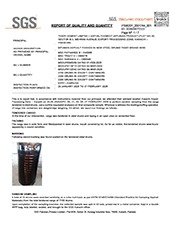
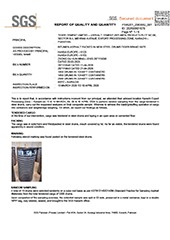
- Certificate of analysis for the supplied batch.
- Safety data sheet.
- Independent inspection by SGS or Bureau Veritas, if agreed and arranged.
- Standard export documents, such as the commercial invoice, packing list, bill of lading and certificate of origin, as applicable.
Other PMB Grades from Brazil Bitumen
Compare PMB 75/130 with the grades around it in our range:
PMB 65/105: soft, elastic grade for thin wearing courses and cooler climates
PMB 90/150: the next softer grade in our range, for applications needing greater flexibility
PMB 45/80: versatile medium grade for wearing courses, SMA and porous asphalt
For water-based binders used in tack coats and surface treatments, see Emulsion Bitumen. For unmodified paving grades, see Penetration Bitumen.
Other Bitumen Products
PMB 75/130 FAQs
PMB 75/130 is a polymer modified bitumen with a penetration range of 75 to 130 tenths of a millimeter at 25 °C, named under the EN 14023 framework. It is a soft, highly elastic modified binder.
The 60 is the minimum softening point in °C. PMB 75/130-60 is a common designation for this grade. The class of our offered product is stated in its technical data sheet.
It is typically used in stress-absorbing membranes and interlayers (SAM/SAMI), anti-crack mortars, geotextile interlayer systems, special mixes and surface treatments. It can also serve as a base binder for modified emulsions.
A stress-absorbing membrane interlayer is a thin, elastic binder layer placed between an old cracked pavement and a new overlay. It helps delay cracks in the old surface from reflecting up through the new layer. Soft, elastic binders such as PMB 75/130 are suited to this role.
It is not usually the first choice. Heavy-traffic wearing courses more often use harder grades such as PMB 45/80 or PMB 25/55. The final choice should follow the project specification.
Not automatically. Brazilian types are defined under ANP Resolution No. 897/2022 with their own softening point, elastic recovery and penetration limits. Compliance should be checked against our technical data sheet.
We supply a technical data sheet, certificate of analysis, safety data sheet and standard export documents. SGS or Bureau Veritas inspection can be arranged on request.
Send us the required quantity, destination port, intended application, any softening point class required and your project specification. We will reply with a CFR or CIF quotation and the technical data sheet.


Request a PMB 75/130 Quotation from Brazil
Looking for a reliable PMB 75/130 supplier from Brazil for your next interlayer, crack-control or pavement rehabilitation project? Tell us the quantity, destination port, intended application and project specification. Our team will reply with a CFR or CIF quotation and the technical data sheet for the offered product.
Visit: www.TigerBitumen.com