


PMB 25/55 Exporter and Supplier from Brazil
Polymer Modified Bitumen for Heavy-Traffic, Rut-Resistant Asphalt
Brazil Bitumen, powered by Tiger Bitumen (HY International Group), is a PMB 25/55 supplier from Brazil for international importers, distributors, asphalt producers and road contractors. PMB 25/55 sits between our hardest grade, PMB 10/40, and the widely used PMB 45/80 in our Polymer Modified Bitumen range.
This hard-to-medium polymer modified bitumen is chosen where asphalt must resist permanent deformation under heavy traffic and high pavement temperatures. At the same time, it offers more flexibility than the hardest modified grades.
Each offer from our PMB 25/55 supplier from Brazil service includes a technical data sheet with the applicable specification, test methods and limits. Therefore, buyers and their engineers can check the product against the project specification before ordering.
What is PMB 25/55?
PMB 25/55 is a polymer modified bitumen classified under the European EN 14023 specification framework. The figures 25/55 indicate its penetration range at 25 °C: 25 to 55 tenths of a millimetre. This places it among the harder PMB grades, softer than PMB 10/40 but stiffer than PMB 45/80.
Depending on the national standard or project, the specification may require different minimum softening points, such as PMB 25/55-55, PMB 25/55-60 or PMB 25/55-65. The number after the hyphen indicates the minimum softening point in °C. The technical data sheet supplied with each quotation confirms the softening point class of our product.
Manufacturers commonly produce PMB 25/55 by modifying base bitumen with an elastomeric polymer such as SBS. This modification can improve elastic recovery and cohesion. The technical data sheet confirms the polymer type and modification method for the product we offer.
PMB 25/55 Technical Specifications
The table below lists the properties used to specify PMB 25/55 under EN 14023. However, the applicable class and confirmed values for our product are provided in the technical data sheet and certificate of analysis supplied with each quotation and shipment.
| Polymer Modified Bitumen 25/55 | |||
| Property | Test method | General PMB 25/55 requirement (EN 14023) | Brazil Bitumen offer |
| Penetration at 25 °C(0.1 mm) | EN 1426 | 25 to 55 | Within 25 to 55; batch result on certificate of analysis |
| Softening point, ring and ball (°C) | EN 1427 | Minimum set by the designation class, e.g. ≥ 55 for PMB 25/55-55 or ≥ 65 for PMB 25/55-65 | Class stated in technical data sheet |
| Cohesion: force ductility (J/cm²)) | EN 13589 / EN 13703 | Class selected by the project specification | Stated in technical data sheet |
| Elastic recovery at 25°C (%) | EN 13398 | Class selected by the project specification | Stated in technical data sheet |
| Fraass breaking point (°C) | EN 12593 | Class selected by the project specification | Stated in technical data sheet |
| Flash point (°C) | EN ISO 2592 | Class selected by the project specification | Stated in technical data sheet |
| Storage stability: difference in softening point (°C) | EN 13399 / EN 1427 | Class selected by the project specification | Stated in technical data sheet |
| Resistance to hardening (RTFOT): change of mass, retained penetration, change in softening point | EN 12607-1 | Classes selected by the project specification | Stated in technical data sheet |
Brazilian specifications. In Brazil, elastomer-modified asphalts are classified as 55/75-E, 60/85-E and 65/90-E under ANP Resolution No. 897/2022. These types have their own penetration limits and requirements for minimum softening point and elastic recovery. Therefore, PMB 25/55 is not automatically equivalent to any of these types. Buyers supplying Brazilian projects should compare the technical data sheet with the applicable ANP, DNIT or project specification.
Applications of PMB 25/55
PMB 25/55 is used where rutting resistance is a priority but a full high-modulus binder is not required. Typical applications include:
- Binder courses on motorways, highways and other heavily trafficked roads
- Wearing courses and stone mastic asphalt (SMA), where the specification calls for a harder modified binder
- Asphalt mixes for hot-climate regions with high pavement temperatures
- Climbing lanes, junctions, roundabouts and bus stops exposed to slow or braking traffic
- High-modulus asphalt mixes, where specified by the project
- Airport aprons and industrial pavements carrying heavy loads, where the specified binder grade is suitable
However, the project’s pavement design and mix design should determine whether PMB 25/55 is suitable for a particular layer.
Key Features and Benefits
When the project specification and mix design are appropriate, PMB 25/55 can provide:
- Strong resistance to permanent deformation under heavy traffic and high pavement temperatures
- A balance of stiffness and flexibility, being harder than PMB 45/80 but more flexible than PMB 10/40
- Elastic recovery and cohesion from elastomer modification, which can help the mix withstand repeated loading
- Improved mix stability compared with unmodified bitumen of similar hardness, depending on the mix design
- Specification flexibility, with softening point classes selected to suit local climate and traffic requirements
Nevertheless, actual pavement performance depends on the mix design, aggregate quality, construction practice, climate and traffic.
Handling, Packaging and Documentation
PMB 25/55 usually requires higher handling temperatures than some conventional paving binders. It also needs stable storage to keep the polymer evenly dispersed. Therefore, follow the technical data sheet for the supplied product when setting heating, storage, mixing and compaction temperatures.
We confirm packaging for PMB 25/55 with each quotation. For available formats, see our bitumen packing page.
Each PMB 25/55 enquiry can be supported with:
- Technical data sheet for the offered product
- Certificate of analysis for the supplied batch
- Safety data sheet
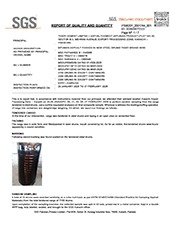
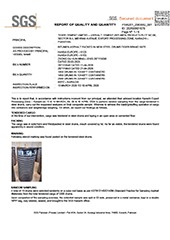
- Independent inspection by SGS or Bureau Veritas, available on request
- Standard export documents, including commercial invoice, packing list, bill of lading and certificate of origin
Other PMB Grades from Brazil Bitumen
Compare PMB 25/55 with the grades either side of it in our Polymer Modified Bitumen range:
PMB 10/40: hard grade for high-modulus base and binder courses
PMB 45/80: medium grade for wearing courses, SMA and porous asphalt, where specified
PMB 40/100: wider penetration range for demanding surface courses, subject to project requirements
For unmodified paving grades, see Penetration Bitumen. Alternatively, for temperature-graded binders, explore Performance Grade Bitumen.
Other Bitumen Products
PMB 25/55 FAQs
PMB 25/55 is a polymer modified bitumen with a penetration range of 25 to 55 tenths of a millimetre at 25 °C, named under the EN 14023 framework. It is a hard-to-medium grade used mainly for rut-resistant asphalt under heavy traffic.
The number after the hyphen is the minimum softening point in °C. Different countries and projects specify different classes. The class of our offered product is stated in its technical data sheet.
It is typically used in binder courses and, where specified, wearing courses and SMA on heavily trafficked roads, especially in hot climates. It is also used at junctions, climbing lanes and other areas exposed to slow or braking traffic.
PMB 25/55 has a lower penetration range, so it is harder and generally more resistant to rutting. PMB 45/80 is softer and more often used for wearing courses, SMA and porous asphalt.
PMB 10/40 is harder and is aimed mainly at high-modulus base and binder courses. PMB 25/55 offers a balance between rutting resistance and flexibility for a wider range of layers.
Not automatically. Brazilian types are defined under ANP Resolution No. 897/2022 with their own softening point, elastic recovery and penetration limits. Compliance should be checked against our technical data sheet.
We supply a technical data sheet, certificate of analysis, safety data sheet and standard export documents. SGS or Bureau Veritas inspection can be arranged on request.
Send us the required quantity, destination port, any softening point class required and your project specification. We will reply with a CFR or CIF quotation and the technical data sheet.


Request a PMB 25/55 Quotation from Brazil
Looking for a reliable PMB 25/55 supplier from Brazil for your next heavy-traffic or hot-climate paving project? Tell us the quantity, destination port and project specification. Our team will reply with a CFR or CIF quotation and the technical data sheet for the offered product.
Visit: www.TigerBitumen.com