


PMB 10/40 Exporter and Supplier from Brazil
Hard Polymer Modified Bitumen for High-Modulus and Heavy-Duty Asphalt
Brazil Bitumen, powered by Tiger Bitumen (HY International Group), is a PMB 10/40 supplier from Brazil for international importers, distributors, asphalt producers and road contractors. PMB 10/40 is the hardest grade in our Polymer Modified Bitumen range.PMB 10/40 is a low-penetration polymer modified bitumen designed for asphalt layers where high stiffness and resistance to permanent deformation are the main requirements. Typical applications include high-modulus base and binder courses and pavements carrying heavy, slow-moving traffic.
Each PMB 10/40 offer includes a technical data sheet stating the applicable specification, test methods and limits. Buyers and their engineers can use it to check the product against the project requirements before ordering.
What is PMB 10/40?
PMB 10/40 is a polymer modified bitumen designated under the European EN 14023 specification framework. The figures 10/40 refer to its penetration range at 25 °C: 10 to 40 tenths of a millimetre. This low range makes it one of the hardest PMB grades in common use.
A full EN 14023 designation also includes a softening-point class after a hyphen, for example PMB 10/40-65 (at least 65 °C) or PMB 10/40-70 (at least 70 °C). The technical data sheet supplied with each quotation confirms the softening-point class of the offered PMB 10/40.
Manufacturers commonly modify hard base bitumen with polymers such as styrene-butadiene-styrene (SBS). The polymer type and modification method for the offered product should be confirmed in its technical data sheet.
PMB 10/40 Technical Specifications
| Polymer Modified Bitumen 10/40 | |||
| Property | Test method | General PMB 10/40 requirement (EN 14023) | Brazil Bitumen offer |
| Penetration at 25 °C(0.1 mm) | EN 1426 | 10 to 40 | Within 10 to 40; batch result on certificate of analysis |
| Softening point, ring and ball (°C) | EN 1427 | Minimum set by the designation class, e.g.≥65 for PMB 10/40-65 | Class stated in technical data sheet |
| Cohesion: force ductility (J/cm²)) | EN 13589 / EN 13703 | Class selected by the project specification | Stated in technical data sheet |
| Elastic recovery at 25°C | EN 13398 | Class selected by the project specification | Stated in technical data sheet |
| Fraass breaking point (°C) | EN 12593 | Class selected by the project specification | Stated in technical data sheet |
| Flash point (°C) | EN ISO 2592 | Class selected by the project specification | Stated in technical data sheet |
| Storage stability: difference in softening point (°C) | EN 13399 / EN 1427 | Class selected by the project specification | Stated in technical data sheet |
| Resistance to hardening (RTFOT): change of mass, retained penetration, increase in softening point | EN 12607-1 | Classes selected by the project specification | Stated in technical data sheet |
Brazilian specifications. In Brazil, elastomer-modified asphalts include types such as 55/75-E, 60/85-E and 65/90-E under the relevant Brazilian regulatory framework. Each type has its own requirements for properties such as softening point, elastic recovery and penetration. PMB 10/40 is not automatically equivalent to any of these types. Buyers should compare the product’s technical data sheet with the applicable ANP, DNIT or project specification.
Applications of PMB 10/40
PMB 10/40 is mainly used in lower and intermediate asphalt layers where stiffness is important. Typical applications include:
- High-modulus asphalt concrete, including suitable EME-type mixes, for base and binder courses
- Rut-resistant binder courses on heavily trafficked highways
- Pavements for heavy, slow-moving or stationary loads, such as port terminals, container yards and logistics hubs
- Truck lanes, bus corridors, intersections and toll plaza approaches
- Industrial pavements and heavy-duty access roads
- Pavement strengthening where a thinner, stiffer structural layer is required by the approved design
The use of PMB 10/40 in any layer should follow the project’s pavement and asphalt mix designs.
Key Features and Benefits
When correctly specified and used in a suitable mix design, PMB 10/40 is designed to provide:
- High stiffness, helping asphalt layers distribute heavy loads to the layers below
- Resistance to rutting under heavy, slow-moving and channelled traffic in hot conditions
- Potentially improved fatigue performance, depending on the polymer formulation and asphalt mix
- High cohesion, where supported by the product specification and test results
- Potential for optimised layer thickness in high-modulus pavement designs, subject to the engineer’s calculations and approval
Actual pavement performance depends on mix design, aggregate quality, construction practices, climate and traffic.
Handling, Packaging and Documentation
As a hard polymer modified binder, PMB 10/40 may require higher storage, mixing and compaction temperatures than conventional paving bitumen. Follow the technical data sheet for the supplied product and avoid overheating.
Packaging is confirmed with each quotation. See our bitumen packing page for the packaging formats we use.
Each PMB 10/40 enquiry can be supported by the applicable documents, including:
- Technical data sheet for the offered product
- Certificate of analysis for the supplied batch, where provided
- Safety data sheet
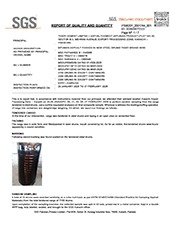
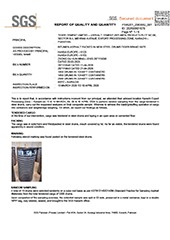
- Independent inspection by SGS or Bureau Veritas, which can be arranged on request
- Standard export documents, such as commercial invoice, packing list, bill of lading and certificate of origin, as applicable
Other PMB Grades from Brazil Bitumen
Other PMB Grades from Brazil Bitumen
If your specification calls for a softer binder, compare PMB 10/40 with our other grades:
PMB 25/55: hard-to-medium grade for specified binder and wearing-course applications
PMB 45/80: review its technical specification for suitable wearing-course, SMA and porous-asphalt applications
PMB 40/100: review its properties for demanding surface-course applications
For unmodified hard paving grades, see Penetration Bitumen. For temperature-graded binders, see Performance Grade Bitumen.
Other Bitumen Products
PMB 10/40 FAQs
PMB 10/40 is a hard polymer modified bitumen with a penetration range of 10 to 40 tenths of a millimetre at 25 °C, named under the EN 14023 framework. It is used mainly in high-modulus and heavy-duty asphalt layers.
It is the minimum softening point in °C. PMB 10/40-65 has a softening point of at least 65 °C, and PMB 10/40-70 at least 70 °C. The class of our offered product is stated in its technical data sheet.
It is typically used in high-modulus base and binder courses and in pavements for heavy, slow-moving loads, such as port yards, logistics hubs, truck lanes and intersections.
It is mainly used in base and binder courses. Wearing courses more often use softer PMB grades such as 25/55 or 45/80, but the final choice depends on the project specification.
Both are hard binders, but PMB 10/40 is polymer modified. This gives it a higher softening point and greater cohesion than an unmodified bitumen of similar hardness.
Not automatically. Brazilian types are defined under ANP Resolution No. 897/2022 with their own softening point, elastic recovery and penetration limits. Compliance should be checked against our technical data sheet.
We supply a technical data sheet, certificate of analysis, safety data sheet and standard export documents. SGS or Bureau Veritas inspection can be arranged on request.
Send us the required quantity, destination port, any softening point class required and your project specification. We will reply with a CFR or CIF quotation and the technical data sheet.


Request a PMB 10/40 Quotation from Brazil
Looking for a reliable PMB 10/40 supplier from Brazil for your next high-modulus or heavy-duty pavement project? Tell us the quantity, destination port and project specification. Our team will reply with a CFR or CIF quotation and the technical data sheet for the offered product.
Visit: www.TigerBitumen.com